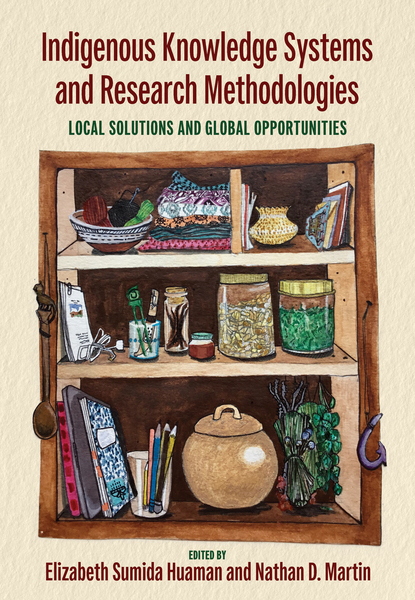
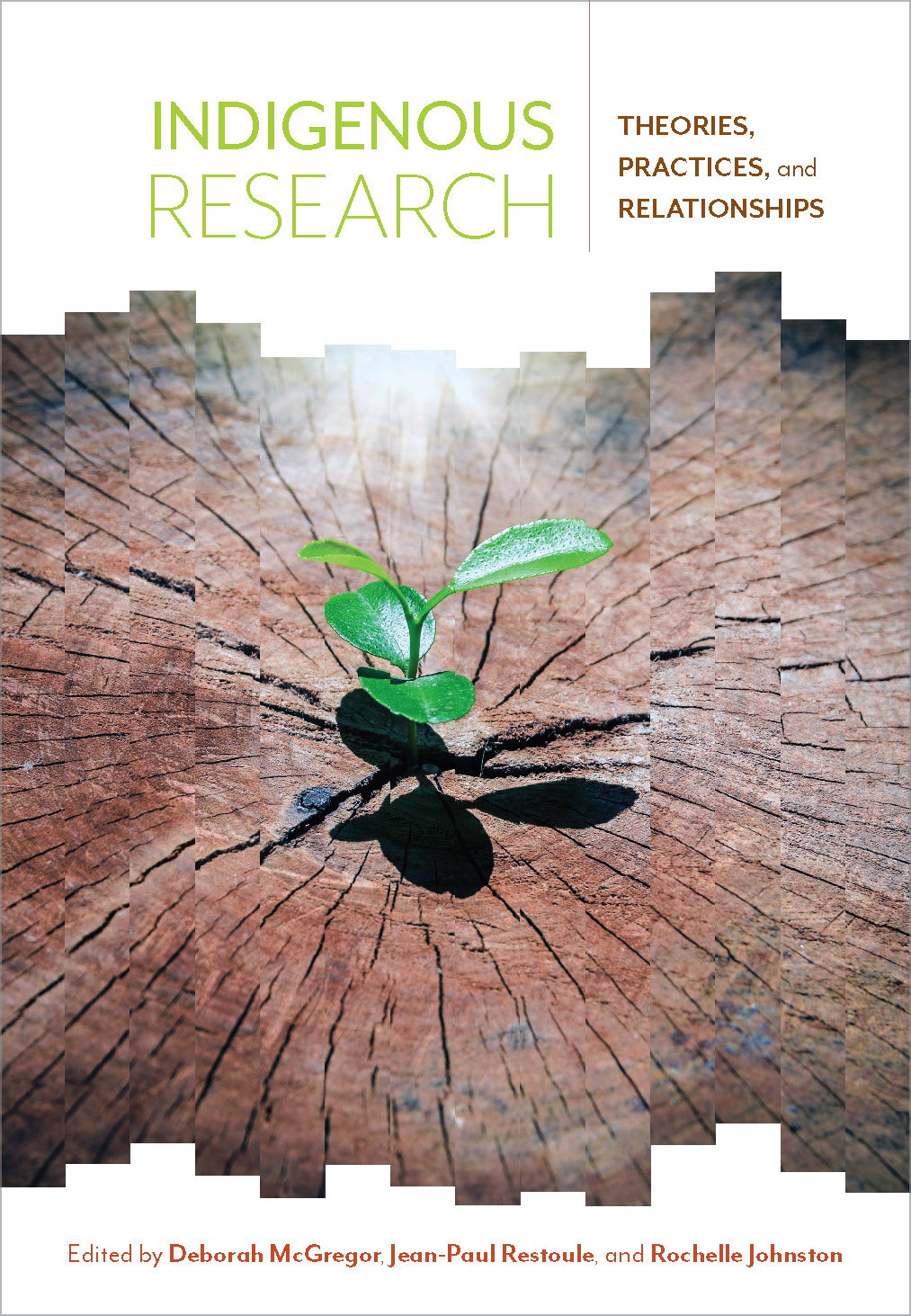
Bringing together researchers from geographically, culturally, and linguistically diverse regions, Indigenous Knowledge Systems and Research Methodologies offers guidance and lessons learned from research projects in and with Indigenous communities around the world. This edited volume explores issues of power, representation, participation, and accountability in studies involving Indigenous peoples and draws on contributors’ reflections of their own varied experiences conducting collaborative research in distinct yet related fields. Anchoring the book are several key aims: exploring decolonizing and decolonial methodological paradigms, honouring Indigenous knowledge systems, and growing interdisciplinary collaboration toward Indigenous self-determination.
This collection is a hopeful contribution to Indigenous communities, institutions, scholarship, and practice, highlighting challenges and ideas from Indigenous researchers who are doing the work of moving forward Indigenous research methodologies. Throughout, authors share critical stories regarding what it means to do Indigenous research and to become an Indigenous researcher today. Authors discuss themes essential to study design—including ethics, positionality, data analysis, and dissemination—that reveal how they resist, negotiate, and transform research using multiple epistemologies. Including chapter learning objectives and reflection questions, this text is a vital resource for students and anyone interested in developing a relationship with Indigenous research methods.
FEATURES
presents proposals and visions for research with Indigenous communities that include both methodological and practical considerations
draws on the experiences of the co-editors in developing and teaching research methods courses for Indigenous graduate students
includes features such as chapter learning objectives, questions for critical thought, and key terms
Foreword: Indigenous Education, Research, and Theory, by George J. Sefa Dei (Asakyiri)
Preface, by Elizabeth Sumida Huaman with Nathan D. Martin
SECTION I: SETTING THE INDIGENOUS RESEARCH AGENDA: INDIGENOUS KNOWLEDGES AND RESEARCH WORLDVIEWS
Chapter 1: Indigenous Research: Methodologies of Resilience and Adaptation, by Elizabeth Sumida Huaman and Nathan D. Martin (Editors)
Chapter 2: Finding the Bone Needle through Indigenous Storywork, by Jo-ann Archibald Q’um Q’um Xiiem (Stó:lō and St’at’imc First Nations)
Chapter 3: What Are Your Values? Positioning the Researcher, by Porter Swentzell (Santa Clara Pueblo)
SECTION II: RESEARCH FOR OUR EARTH
Chapter 4: Holographic Epistemology (Indigenous Common Sense): A Nakòna Example, by Sweeney Windchief (Fort Peck Assiniboine)
Chapter 5: Making Sense of Anecdata: Pushing the Edges of Science in Decolonizing Research, by Peter Mataira (Māori, Ngāti Porou/Ngāti Kahungunu)
Chapter 6: “Our Indigenous brothers and sisters are available for us, and we are available for them”: Non-Local Relationships Nurturing Research through an Alaska-Aotearoa Online Student Exchange, by Ocean Ripeka Mercier (Ngāti Porou) and Beth Ginondidoy Leonard (Dene’/Athabascan)
SECTION III: RESEARCH FOR WELL-BEING
Chapter 7: Restoring Ceremony as the Methodological Approach in Indigenous Research: The Indigenous Doula Project, by Jaime Cidro (Anishnawbe), Stephanie Sinclair (Anishnawbe), Sarah DeLaronde (Cree), and Leona Star (Cree)
Chapter 8: Methodological Challenges When Doing Qualitative Mental Health Research among Sámi and Norwegians, by Hilde Thørnquist (Pite Sámi)
Chapter 9: Indigenizing Research Participant Recruitment, by Rachell Tenorio (Santo Domingo Pueblo/Kewa Pueblo)
SECTION IV: RESEARCH FOR PEDAGOGY AND LEARNING
Chapter 10: Credentialing Our Own: Development of an Indigenous Master of Public Health Degree, by Maile Chargualaf Flores Taualii (Kanaka Maoli)
Chapter 11: Qualitative Analysis as Ho‘oku‘iku‘i or Bricolage: Teaching Emancipatory Indigenous Research to Native Hawaiian Graduate Students, by Julie Kaomea (Kanaka Maoli)
SECTION V: RESEARCH FOR CONNECTIVITY AND CULTURAL PRACTICES
Chapter 12: Yeewa (Collaborative Creativity) as Methodology, by Trevor Reed (Hopi)
Chapter 13: The Voice of Thunder: Respect, Reciprocity, and Reconciliation in Indigenous Research, by Brian D. McInnes (Ojibwe/Potawatomi)
Chapter 14: Mink’a Methodologies: Quechua Research in the Peruvian Andes, by Elizabeth Sumida Huaman (Wanka/Quechua)
SECTION VI: RESEARCH FOR PEOPLEHOOD AND BELONGING
Chapter 15: Remaking Chabochi: Research, Positionality, and Power on Rarámuri Lands, by Jorge Morales Guerrero (Chabochi/Mestizo Mexicano)
Chapter 16: Measuring Indigenous Identity with Indigenous Communities, by Jameson D. Lopez (Quechan) and Danielle D. Lucero (Isleta Pueblo)
Chapter 17: Ainu Puri and Research: Seeking “Our Way” for the Future Well-Being of Ainu People in Japan, by Nanako Iwasa and Kaori Arai (Ainu)
Epilogue, by Elizabeth Sumida Huaman (Lead Editor)
Glossary of Terms
Contributing Author Biographies
Biography
Elizabeth Sumida Huaman (Wanka/Quechua) is an Associate Professor of Comparative and International Development Education in the College of Education and Human Development at the University of Minnesota, Twin Cities.
Nathan D. Martin is an Associate Professor of Justice and Social Inquiry in the School of Social Transformation at Arizona State University.
“The editors of this engaging and accessible volume bring together over 20 Indigenous scholars who collectively reimagine research possibilities, offer rich examples of place-based knowledge and practices, and challenge readers to resist dominant Western research paradigms. This book offers readers nuanced understandings of ways that Indigenous knowledge and research is engaging local solutions and global opportunities in powerful ways both new and timeless.”
—Dr. Beth Blue Swadener, Professor, School of Social Transformation, Arizona State University
“In this time of critical social, political, and racial transformation comes Huaman and Martin’s compelling cache of expertly edited essays that are enlightening, challenging, and rigorously researched. These critical works remind us of our individual and collective responsibilities. If we continue to ignore Indigenous realities and fail to take deliberate actions to understand Indigenous ways of being, the future is bleak, indeed. As these scholars skillfully show, we all gain when Native peoples are accorded the respect and legitimacy they deserve.”
—Dr. David E. Wilkins (Lumbee Nation), Professor, Jepson School of Leadership Studies, University of Richmond
“This book offers an innovative and rich in-depth look at a diversity of Indigenous knowledges and research methodologies through a relational lens. The text is a provocation for us all to advocate for sustained engagement with and embedding of multiple and diverse epistemological positions to normalize the position of Indigenous knowledges, epistemologies, and methodologies in the academy.”
—Dr. Karen Sinclair (Ngarrindjeri), Program Director, Aboriginal Studies, University of South Australia
“This resource should be used in teacher education programs as foundational to understanding the complexities with/in Indigenous research. It is clear that authors placed immense time and care into sharing with other educators and researchers what they learned. The authenticity of their approaches came through in the writing, including their honesty about the challenges faced, as well as the dedication to centering Indigenous research approaches in academic discourse.”
Reflowable eTextbooks respond to the size of the device they are viewed on, much like a typical website. This causes them to look different from a traditional book. They may also contain embedded audio, video, or interactive components in addition to the VitalSource Reader's standard study tools.
What is a Fixed Layout eBook?
A fixed layout eTextbook maintains the look and the feel of a printed textbook. The text is fixed, and the screen size determines the size of the text. These eTextbooks work best on large-screen devices and do not contain any embedded media or interactive content.
Auto Renew
Auto renew allows e-book rentals to be automatically renewed after the initial rental duration. If enabled, you will automatically be charged and your rental will renew for the same duration as purchased. Auto renew is set to off by default. If auto renew is off, you lose access to the e-book after the rental duration.
Hi there!
All digital products are non-refundable and cannot be downloaded outside of the VitalSource Bookshelf app.
The digital eBook you have selected is a Rental and will expire when the selected duration runs out. If you would like to purchase lifetime access to this eBook, please select a Purchase option instead.